
Hurricane season in Florida runs June through November, and the properties that come through storms with the least damage are almost always the ones that were maintained ahead of time — not scrambled on 48 hours' notice.
Trim before it's forecast, not after
Overgrown branches and dense canopies catch more wind and are far more likely to snap or drop limbs. Regular trimming through the season keeps trees and large shrubs aerodynamic instead of top-heavy.
Check for weak or dead limbs
Dead wood is the first thing to come down in high wind, often onto a roof, car or fence. A quick visual inspection of mature trees each season catches problems while they're still a simple pruning job.
Clear drainage paths
Florida's afternoon storms and tropical systems both dump a lot of water fast. Beds and low points that don't drain well can drown plants and erode mulch in a single storm — checking grading and drainage before the season peaks avoids most of that damage.
After the storm: move fast on debris
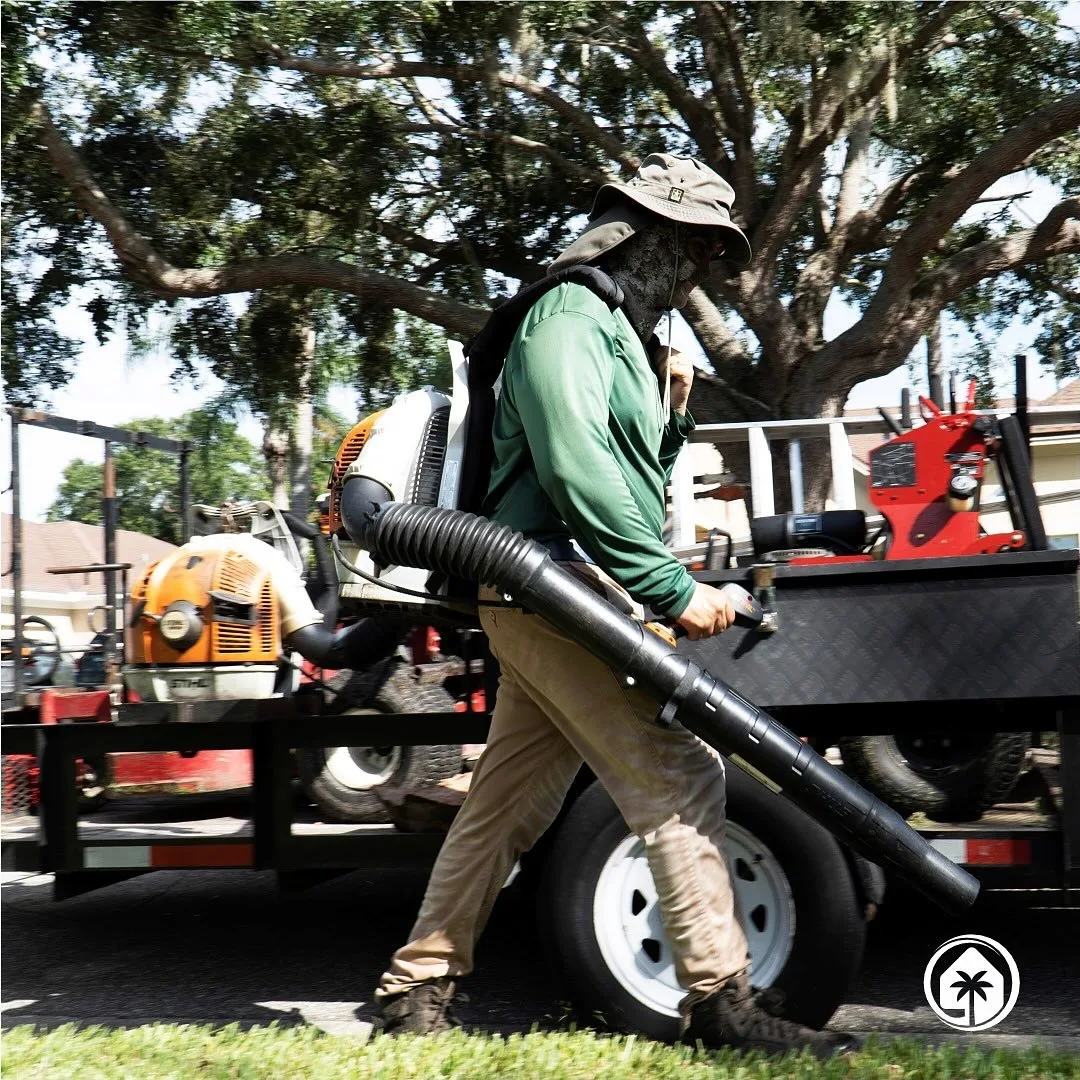
Once a storm passes, clearing fallen debris off the lawn quickly matters — grass smothered under branches and leaves for more than a few days is much slower to recover.
Our care and maintenance visits fold storm prep into the regular schedule, so it's never a separate emergency call.